Η ανακάλυψη ενός εξαιρετικά θερμού σμήνους γαλαξιών στο πρώιμο σύμπαν οδηγεί τους αστρονόμους σε επανεξέταση καθιερωμένων θεωριών για τον σχηματισμό και την εξέλιξη των μεγαλύτερων κοσμικών δομών.
Η ανακάλυψη αφορά ένα σμήνος που υπήρχε μόλις 1,4 δισεκατομμύρια χρόνια μετά τη Μεγάλη Έκρηξη, εμφανίζοντας θερμοκρασίες πολύ υψηλότερες από εκείνες που προβλέπουν τα σημερινά μοντέλα. Η σχετική μελέτη που δημοσιεύτηκε στις 5 Ιανουαρίου στο επιστημονικό περιοδικό Nature υποδηλώνει ότι οι μηχανισμοί με τους οποίους μεγαλώνουν και «ωριμάζουν» τα σμήνη γαλαξιών ενδέχεται να είναι ταχύτεροι και πιο βίαιοι απ’ ό,τι θεωρούνταν μέχρι σήμερα.
Τα σμήνη γαλαξιών αποτελούνται από τεράστιες συγκεντρώσεις σκοτεινής ύλης και εκατοντάδες έως χιλιάδες γαλαξίες, που συνδέονται μεταξύ τους με τη βαρύτητα. Ανάμεσα στους γαλαξίες εκτείνεται το λεγόμενο ενδοσμηνιακό μέσο, ένα αραιό αέριο που θερμαίνεται σταδιακά καθώς το σμήνος σχηματίζεται, λόγω βαρυτικών αλληλεπιδράσεων αλλά και της ενέργειας που απελευθερώνουν νεαρά άστρα και μαύρες τρύπες. Πρόκειται για μια διαδικασία που, σύμφωνα με τις θεωρίες, απαιτεί πολύ χρόνο, γι’ αυτό και η ανίχνευση θερμού ενδοσμηνιακού αερίου σε τόσο νεαρά σμήνη είναι σπάνια, αναφέρει το LiveScience.
Για τη νέα μελέτη, οι ερευνητές χρησιμοποίησαν το Atacama Large Millimeter/submillimeter Array (ALMA), ένα ισχυρό ραδιοτηλεσκόπιο που βρίσκεται στη Χιλή, παρατηρώντας ένα λαμπρό και ιδιαίτερα νεαρό σμήνος με την ονομασία SPT2349-56. Αν και το σμήνος έχει σχετικά μικρό μέγεθος – συγκρίσιμο με την εξωτερική άλω του δικού μας γαλαξία – φιλοξενεί περισσότερους από 30 ενεργούς γαλαξίες, τρεις υπερμεγέθεις μαύρες τρύπες και σχηματίζει άστρα με ρυθμό πάνω από 5.000 φορές μεγαλύτερο από εκείνον του γαλαξία μας.
Πέντε φορές θερμότερο από τις προβλέψεις
Χρησιμοποιώντας το θερμικό φαινόμενο Sunyaev–Zeldovich, η ομάδα διαπίστωσε ότι το αέριο του ενδοσμηνιακού μέσου είναι τουλάχιστον πέντε φορές θερμότερο από ό,τι προβλέπουν τα υπάρχοντα μοντέλα για ένα τόσο νεαρό σμήνος.
Η μελέτη δείχνει ότι τα σμήνη γαλαξιών μπορεί να σχηματίζονται πολύ πιο γρήγορα απ’ ό,τι πιστευόταν. Όπως εξηγούν οι ερευνητές, πιθανός παράγοντας είναι η έντονη δράση των υπερμεγεθών μαύρων τρυπών, οι οποίες φαίνεται να διοχέτευαν τεράστια ποσά ενέργειας στο περιβάλλον τους, διαμορφώνοντας το σμήνος σε εξαιρετικά πρώιμο στάδιο.
Στο μέλλον, η ομάδα σκοπεύει να διερευνήσει πώς η έντονη αστρογένεση, οι ενεργές μαύρες τρύπες και το υπερθερμασμένο ενδοσμηνιακό αέριο αλληλεπιδρούν μεταξύ τους, προσπαθώντας να απαντήσουν στο πώς τέτοιες ακραίες διεργασίες μπορούν να συνυπάρχουν σε ένα τόσο νεαρό και συμπαγές κοσμικό σύστημα.
Astronomers Discover Unexpectedly Hot Galaxy Cluster in Early Universe
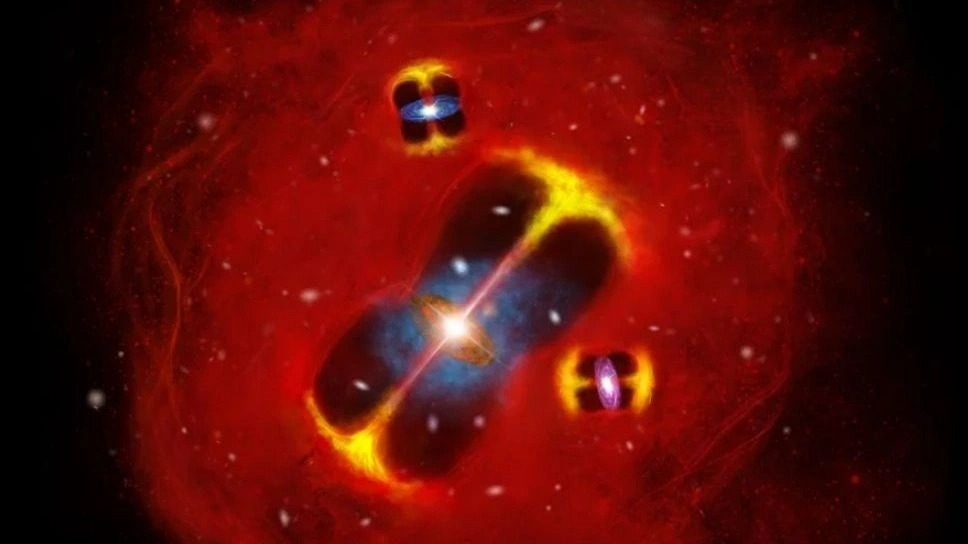
A recent astronomical discovery has revealed an exceptionally hot galaxy cluster that formed just 1.4 billion years after the Big Bang. The temperature of the cluster, named SPT2349-56, is at least five times higher than predicted by existing cosmological models for such a young system. This suggests that the processes of galaxy cluster formation and evolution may be faster and more intense than previously thought. The SPT2349-56 cluster, although smaller than our own galaxy, is remarkably active, hosting over 30 active galaxies and three supermassive black holes. Simultaneously, it exhibits a star formation rate far exceeding that of our galaxy, creating over 5,000 times more new stars. Researchers used the Atacama Large Millimeter/submillimeter Array (ALMA) to study the cluster and determine the unusually high temperature of the intracluster gas. Detecting this heat in such a young cluster is rare, as gas heating is considered a slow process linked to gravitational interaction and energy from young stars and black holes. The study supports the idea that supermassive black holes play a significant role in the rapid evolution of galaxy clusters, channeling vast amounts of energy into their surroundings. The researchers plan to continue studying SPT2349-56 to better understand the interactions between star formation, black holes, and hot gas, and to revise theories about the formation of cosmic structures.
Similar Articles
You Might Also Like

Β. Καραγιάννης στο «Γ»: «Θέλουμε αθλητικογράφους που θα κοντραριστούν με τα κατεστημένα»
Dec 21

Ντέμης Χασάμπης: Τι ετοιμάζει ο Ελληνοκύπριος «σκακιστής» της τεχνητής νοημοσύνης στην Google
Dec 26

Γιάννης Τουμαζής: Μια ώριμη κοινωνία δεν ζητά από την τέχνη να σιωπά
Dec 28

Πέντε βότανα που ενισχύουν την άμυνα απέναντι στις ιώσεις του χειμώνα
Dec 28
Ο πλανήτης που δεν θα έπρεπε να υπάρχει: Aποστολή μπορεί να λύσει το μυστήριο το 2026
Dec 29