Όταν το παγόβουνο A23a αποσπάστηκε από την Ανταρκτική, ο Ρόναλντ Ρίγκαν ήταν πρόεδρος των ΗΠΑ και το Top Gun έσπαγε τα ταμεία των κινηματογράφων.
Σαράντα χρόνια μετά, το πρώην μεγαλύτερο παγόβουνο του κόσμου ετοιμάζεται να διαλυθεί στα νερά του Νότιου Ατλαντικού, ανάμεσα στο άκρο της Νότιας Αμερικής και το παγωμένο νησί της Σάουθ Τζόρτζια.
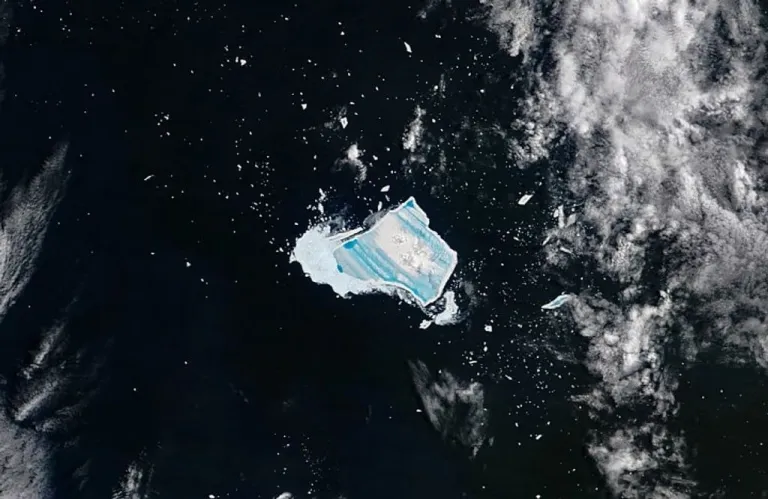
Σε εικόνα που μετέδωσε ο δορυφόρος Terra της NASA στις 26 Δεκεμβρίου, το A23a μοιάζει να καλυφθεί από μια απέραντη πισίνα, καθώς ο πάγος λιώνει και το νερό συγκεντρώνεται στην επιφάνεια.
Όταν αποσπάστηκε από την Τράπεζα Πάγου Φίλτσνερ το 1986, το παγόβουνο είχε έκταση 4.000 τετραγωνικών χιλιομέτρων, λίγο μεγαλύτερο από την Αττική που περιορίζεται στα 3.800 τετραγωνικά χιλιόμετρα.
Λίγο μετά την απόσπασή του, ο γιγάντιος όγκος πάγου, με πάχος μερικές εκατοντάδες μέτρα, προσάραξε στον βυθό και έμεινε ακίνητος μέχρι το 2020, οπότε άρχισε πάλι να πλέει.
Μέχρι τον Δεκέμβριο του 2023, το A23a είχε χάσει μόλις 100 τετραγωνικά χιλιόμετρα πάγου και η μάζα του εκτιμάτο στους 900 δισεκατομμύρια τόνους.
Το 2025, ο γίγαντας παραλίγο να συγκρουστεί με το νησί της Σάουθ Τζόρτζια, 3.000 χιλιόμετρα μακριά από τη γενέτειρά του.
Την ίδια χρονιά, μεγάλα κομμάτια αποσπάστηκαν από το Α23a, του οποίου το μέγεθος περιορίζεται τώρα στα 1.182 τετραγωνικά χιλιόμετρα, λίγο περισσότερο από την έκταση της Πόλης της Νέας Υόρκης, σύμφωνα με την εικόνα της NASA.
Μια πιο κοντινή φωτογραφία του παγόβουνου τραβήχτηκε από αστροναύτη του Διεθνούς Διαστημικού Σταθμού μια μέρα αργότερα, στις 27 Δεκεμβρίου.
Στην εικόνα της NASA διακρίνεται ωστόσο καλύτερα μια σειρά από λευκές και γαλάζιες γραμμές, οι οποίες πιθανότατα σχηματίστηκαν πριν από εκατοντάδες χρόνια, όταν το παγόβουνο ήταν τμήμα παγετώνα που κυλούσε προς τη θάλασσα.
Καθώς τριβόταν πάνω στο υποκείμενο πέτρωμα της Ανταρκτικής, το τεράστιο κομμάτι πάγου παραμορφώθηκε και απέκτησε αυλάκια που θυμίζουν ακορντεόν.
«Οι ραβδώσεις σχηματίστηκαν παράλληλα με την κατεύθυνση ροής [του παγετώμα], γεγονός που τελικά δημιούργησε μικρές ράχες και κοιλάδες στην κορυφή του παγόβουνου, οι οποίες τώρα κατευθύνουν τη ροή του νερού τήξης» εξήγησε ο Βαλτ Μέγιερ του αμερικανικού Εθνικού Κέντρου Δεδομένων Χιονιού και Πάγου.
Οι εικόνες υποδεικνύουν ότι το A23a απέχει μερικές εβδομάδες ή ακόμα και μέρες από την πλήρη διάλυσή του. Πλέει αυτές τις ημέρες σε νερά θερμοκρασίας 3 βαθμών Κελσίου και κινείται βόρεια.
«Σίγουρα δεν περιμένω το Α23a να αντέξει το καλοκαίρι του νότιου ημισφαιρίου» δήλωσε ο Κρις Σούμαν, συνταξιούχος ερευνητής του Πανεπιστημίου του Μέριλαντ.
Το τέλος του γίγαντα είναι κοντά, όμως μια σειρά από άλλα παγόβουνα κινούνται γύρω από την Ανταρκτική ή έχουν προσαράξει έξω από τις ακτές της.
Αρκετά από αυτά, όπως το Α81, to Β22a και το D15a έχουν έκταση άνω των 1.500 τετραγωνικών χιλιομέτρων.
Shadow of Its Former Self, the World's Largest Iceberg Turns Blue as It Melts
The A23a iceberg, which broke away from Antarctica in 1986, is in the process of disintegrating in the South Atlantic. Initially covering 4,000 square kilometers, A23a was the largest iceberg in the world. After breaking away, the iceberg ran aground and remained stationary for over three decades, until 2020, when it began to float again. Despite losing only 100 square kilometers of ice by December 2023, its mass is estimated at 900 billion tons. In 2025, A23a narrowly avoided colliding with the island of South Georgia. Today, its size has decreased to 1,182 square kilometers, slightly larger than the area of New York City. NASA images show the iceberg melting rapidly, with water accumulating on the surface. Scientists estimate that A23a will completely disintegrate within weeks or even days, as it floats in waters of 3 degrees Celsius. Despite the end of A23a, there are other large icebergs moving around Antarctica, reminding us of the continuing impact of climate change on the region.
You Might Also Like

Οι 15 viral στιγμές που… σάρωσαν το διαδίκτυο το 2025
Dec 27
Επέζησαν απ’ το ναυάγιο, πνίγηκαν από το σύστημα: Νέα στοιχεία στο φως για την τραγωδία με μετανάστες στο Κάβο Γκρέκο
Dec 31

Τα big trades του 2025
Dec 31
Σημαντικά ευρήματα από το αρχαίο λιμάνι της Πέγειας
Jan 8
Deutsche Welle: Από τις «Μπανανίες» στον «Κόνδορα» - Οι ΗΠΑ στη Νότια Αμερική
Jan 9