Το 1936, αρκετά χρόνια πριν ο Βενεζουελάνος συγγραφέας και διανοητής Αρτούρο Ούσλαρ Πιέτρι (1906-2001) εισάγει τον όρο «μαγικός ρεαλισμός» στη λατινοαμερικανική λογοτεχνία, είχε ο ίδιος τιτλοφορήσει άρθρο του με τη φράση «Σπέρνοντας το πετρέλαιο».
Ο Πιέτρι έκρουε τον κώδωνα του κινδύνου για την ξενόφερτη εξάρτηση της χώρας του από τον μαύρο χρυσό και πρότεινε μια πιο ορθολογική χρήση και επένδυση της πετρελαϊκής υπεραξίας σε άλλους τομείς της οικονομίας. Το σύνθημα «Sembrar el petróleo», όμως, έμελλε να γίνει αντικείμενο οικειοποίησης από όλα σχεδόν τα λαϊκά- και λαϊκιστικά- κινήματα της χώρας μέχρι που μετεξελίχθηκε στο «Sembrando el petróleo, cosechando cultura», δηλαδή «Σπέρνοντας πετρέλαιο, θερίζεις πολιτισμό», που είναι το εταιρικό μότο της PDVSA La Estancia, του πολιτιστικού βραχίονα της κρατικής πετρελαϊκής εταιρείας της Βενεζουέλας.
Με ένα αρκούντως… επιθετικό μάρκετινγκ, η PDVSA La Estancia «βομβαρδίζει» το κοινό φαντασιακό των Βενεζουελάνων με την αίσθηση ότι μπορεί να πετύχει την «ουτοπία του εφικτού», όπου το πεπερασμένο πετρέλαιο μετατρέπεται «μαγικά» σε ανανεώσιμο πόρο. Προφανώς, μιλάμε για μια ιδεολογική αναπλαισίωση του πολιτισμού, που υπό μία έννοια αντιμετωπίζεται ως «ορυκτό κοίτασμα» που συσσωρεύεται στο υπέδαφος, εξορύσσεται και διανέμεται από το κράτος.
Για τους Βενεζουελάνους σήμερα η κουλτούρα είναι αδιαχώριστη από τη γη και το υπέδαφος και το πετρέλαιο καθορίζει την ίδια τους την πολιτιστική ταυτότητα. Χαρακτηριστικά, ο ζωγράφος και θεατρικός συγγραφέας Σέζαρ Ρενχίφο (1915-1980) είχε κάποτε πει ότι «εμείς [οι καλλιτέχνες] είμαστε σαν το πετρέλαιο», υπογραμμίζοντας τη σχέση μεταξύ τέχνης, κουλτούρας και πόρων σε μια πετρελαιοκρατούμενη κοινωνία.
Στη Βενεζουέλα του «πετροσοσιαλισμού», η κρατική εταιρεία πετρελαίου δημιούργησε στο Καράκας ένα παράλληλο θεσμικό πεδίο, χρησιμοποιώντας τον πολιτισμό ως εργαλείο νομιμοποίησης και εδαφικής κυριαρχίας, ασκώντας και σιωπηρή πολιτιστική πολιτική. Καθώς η διαμόρφωση του σύγχρονου κράτους και της κοινωνίας εξαρτιόταν όλο και περισσότερο από την πετρελαιοβιομηχανία, η σχέση μεταξύ των εσόδων από τον ορυκτό πλούτο και της αστικής κουλτούρας κατέστη δομική, συμβιωτική και αδιάρρηκτη.
Σε μια από τις μελέτες της, η αρχιτέκτονας και ερευνήτρια πολιτισμού και αστικού χώρου Πενέλοπε Πλάσα‑Αζουάχε περιγράφει αυτή τη σχέση θέτοντας ως βασικούς άξονες μεταξύ άλλων το «μαγικό κράτος» και την «κουλτούρα ως ορυκτό κοίτασμα».
Ο όρος «μαγικό κράτος», που πρώτος εισήγαγε ο Βενεζουελάνος ανθρωπολόγος Φερνάντο Κορονίλ (1944-2011), περιγράφει μια πολιτεία που χρησιμοποιεί το μονοπώλιο του πετρελαϊκού πλούτου για να εμφανίζεται ως μοναδικός και μεγαλόψυχος φορέας μεταμόρφωσης και προόδου: ένας ταχυδακτυλουργός που βγάζει συνέχεια από το καπέλο τοπόσημα. Χρησιμοποιεί το μονοπώλιο της πετρελαϊκής προσόδου δραματουργικά, θεσπίζοντας συλλογικές φαντασιώσεις προόδου μέσω θεαματικών έργων υποδομής και ταχείας αστικοποίησης. Ταυτόχρονα, η αστική κουλτούρα τροφοδοτείται από την ψευδαίσθηση ότι η νεωτερικότητα μπορεί να επιτευχθεί «εν μια νυκτί» χάρη στον πλούτο του υπεδάφους.
Καθώς, λοιπόν, το πετρελαϊκό κράτος «θερίζει» πολιτισμό, η δημόσια τέχνη λειτουργεί ως δείκτης κυριαρχίας. Την ίδια στιγμή, η κοινωνία έμαθε να αντικρίζει τον εαυτό της ως «έθνος του πετρελαίου». Σήμερα, υπάρχει μια άμεση ταύτιση των πολιτών με την πετρελαϊκή ταυτότητα, υπό το σύνθημα «όλοι πρέπει να νιώθουμε εργάτες πετρελαίου». Με τον τρόπο αυτό η PDVSA, πέρα από εξορυκτική εταιρεία, προβάλλεται ως παραγωγός κοινωνικού και πολιτιστικού κεφαλαίου και φορέας «επιστροφής» του πλούτου στην κοινωνία.
Αυτή η ιδέα ενσαρκώνεται σε διαφημιστικές καμπάνιες της PDVSA La Estancia, όπου γιγάντιοι εργάτες πετρελαίου με τη χαρακτηριστική κόκκινη στολή εμφανίζονται σε αφίσες να «συντηρούν» ή να «εγκαθιστούν» εμβληματικά δημόσια έργα τέχνης στην πόλη (ή ακόμη παιδικές χαρές και άλλα τοπόσημα), σαν να πρόκειται για βαριά μηχανήματα διυλιστηρίου. Με τον τρόπο αυτό, το κράτος οικειοποιείται τις τέχνες ως δική του «σοδειά» που σχεδόν κυριολεκτικά… αναβλύζει από τα σπλάχνα της γης.
Η Πενέλοπε Πλάσα είναι λέκτορας στο Πανεπιστήμιο του Ρέντινγκ, ωστόσο αξίζει να πούμε ότι δεν συγκαταλέγεται σ’ αυτούς που οι καλοθελητές θεωρούν «αντιφρονούντες». Περιγράφει το πετρελαϊκό κράτος ως αποκλειστικό διαχειριστή της ομορφιάς, που υπενθυμίζει διαρκώς στους πολίτες ότι δεν είναι παρά υγρός μαύρος χρυσός σε άλλη μορφή. Η PDVSA La Estancia λειτουργεί σαν «αλχημιστής», ο οποίος παίρνει το «ακάθαρτο» αργό πετρέλαιο από τα έγκατα της γης και το «μεταστοιχειώνει» σε υπέρλαμπρα δημόσια γλυπτά και αστικές παρεμβάσεις, πείθοντας τους πολίτες ότι ο πλούτος δεν τελειώνει ποτέ όσο το «μαγικό κράτος» συνεχίζει να «παράγει» ομορφιά και τάξη, πολιτιστικά αγαθά που θα παραμείνουν ως ανανεώσιμη κληρονομιά.
Το θέμα είναι ότι η νοοτροπία αυτή έχει τις ρίζες της σ’ αυτό που ο μαρξιστής ανθρωπολόγος Ροδόλφο Κιντέρο (1909-1985), πολύ πριν την εθνικοποίηση του 1976, περιέγραφε σχετικά με την «κουλτούρα του πετρελαίου» ως εξωγενούς δύναμης κατάκτησης και μηχανισμού πολιτιστικής αποικιοποίησης. Αυτή δεν γεννήθηκε οργανικά στη βενεζουελάνικη κοινωνία, αλλά εισήχθη από τις αμερικανικές εταιρείες, αυτές για τις οποίες σήμερα ο Τραμπ και οι συν αυτώ ζητούν σήμερα και τα ρέστα. Ήταν μια επιθετική πολιτισμική εισβολή που άλλαξε για πάντα τον τρόπο που οι Βενεζουελάνοι ζουν, φαντάζονται το μέλλον και αντιλαμβάνονται το κράτος. Μιλάμε για μια κατάκτηση συνείδησης.
Με την εθνικοποίηση, η κουλτούρα του πετρελαίου απλά άλλαξε ιδιοκτήτη και επανεγγράφηκε. Το αποτέλεσμα είναι η βαθιά ριζωμένη σημερινή πολιτιστική ταυτότητα της χώρας να μοιάζει μ’ ένα δημόσιο γλυπτό βυθισμένο σε δεξαμενή πετρελαίου, το οποίο καθορίζεται από το μαύρο υγρό που το περιβάλλει. Οι πολίτες δεν αντικρίζουν μόνο τέχνη, αλλά και την πεποίθηση ότι αν η δεξαμενή στερέψει, η ίδια η ύπαρξή τους θα καταρρεύσει.
Η βενεζουελάνικη εμπειρία, εκτός από εξωτικό παράδειγμα «ευλογίας και κατάρας», ίσως στα μέρη μας αξίζει να αναγνωστεί και ως προειδοποίηση: όταν ο πολιτισμός είναι προϊόν μονοκαλλιέργειας, όταν συνδέεται σχεδόν αποκλειστικά με την οικονομική ανάπτυξη, την τουριστική κατανάλωση ή την εξωγενή «αναβάθμιση» νοοτροπιών, τότε μετατρέπεται σε πόρο προς εξόρυξη που αργά ή γρήγορα θα εξαντλήσει το ίδιο το έδαφος που υποτίθεται ότι καλλιεργεί. Δηλαδή, το νόημά του.
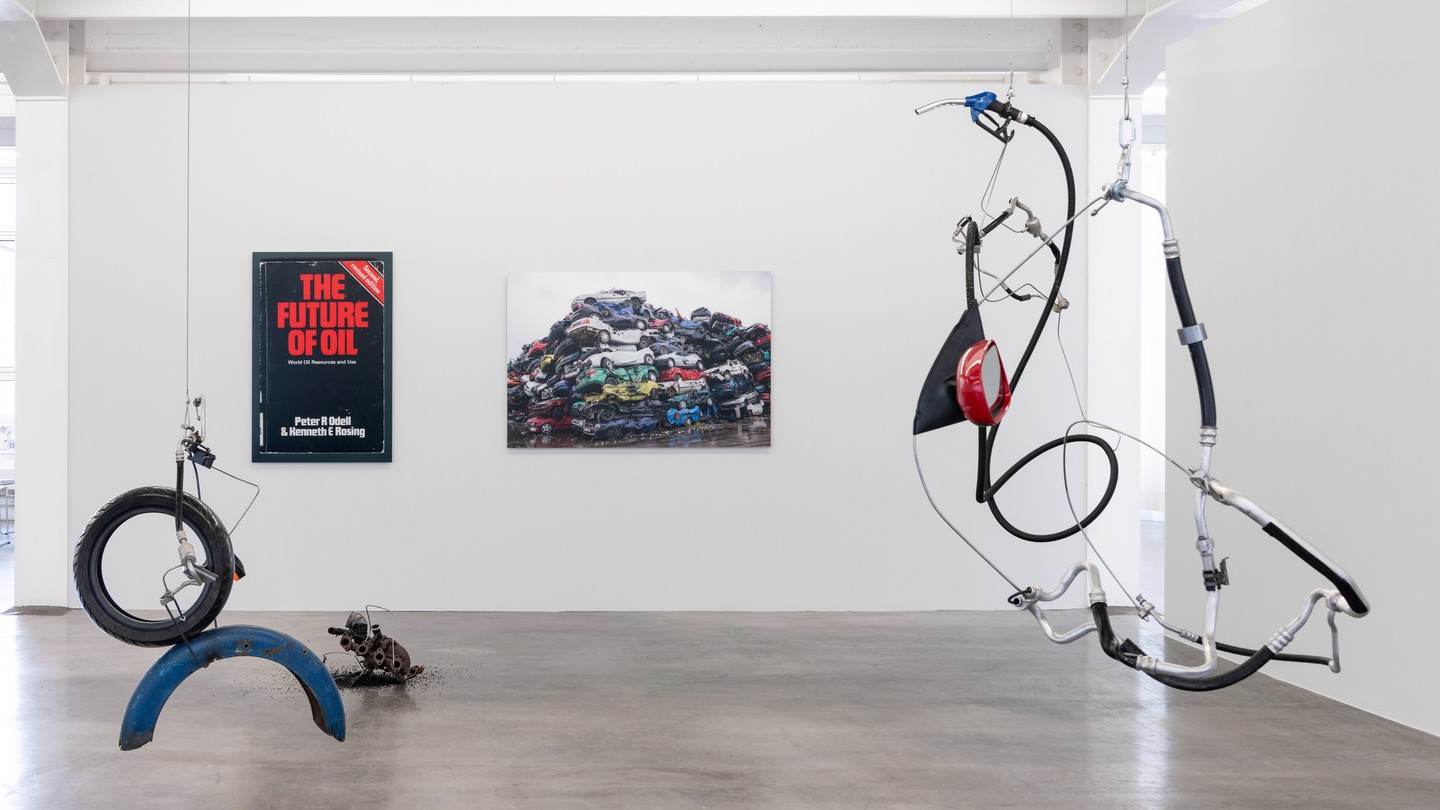
* Στην κύρια φωτογραφία η εγκατάσταση της Βενεζουελάνας εικαστικού Άνα Αλένσο «Αργή Καύση», όπως παρουσιάστηκε στο Kunstverein Reutlingen, το 2023. Μια σύνθεση μετα-βιομηχανικών στοιχείων υπογραμμίζει την «αργή βία» της πετρελαϊκής κουλτούρας και το ότι οι φαντασιακές εικόνες της δεν περιορίζονται μόνο στην παραγωγική τους διάσταση, αλλά εκκρίνουν κοινωνικά και περιβαλλοντικά απόβλητα.
Ελεύθερα, 11.1.2026
Culture as a Mineral and the Utopia of the Possible
The article examines the relationship between oil and culture in Venezuela, a connection historically shaped and intensified by the country's "petro-socialist" model. Starting with Arturo Uslar Pietri's warning in 1936 about over-reliance on oil, the article analyzes how oil has become an ideological tool and a source of cultural identity. The state oil company PDVSA La Estancia uses culture as a means of legitimization and territorial dominance, promoting the idea that oil can be "magically" transformed into a renewable resource and "harvest" culture. The term "magical state" describes the state's ability to use oil wealth to create an illusion of progress and transformation, while culture is treated as a "mineral deposit" that is mined and distributed by the state. The relationship between oil revenues and urban culture has become structural and unbreakable, shaping the modern state and society of Venezuela. The author notes that culture in Venezuela is inextricably linked to the land and oil, with artists like César Rengifo recognizing the connection between art, culture, and resources. PDVSA La Estancia, through aggressive marketing, attempts to convince the public of the "utopia of the possible" where oil is transformed into a renewable resource. Overall, the article presents a critical look at how oil has shaped the cultural identity and political reality of Venezuela, highlighting the ideological reframing of culture as a tool of state policy and control.
You Might Also Like

Από το σεξ απίλ έως την ακροδεξιά, η Μπριζίτ Μπαρντό συμβόλιζε μια Γαλλία σε μετάβαση
Dec 29

Τι διαφορετικό είδαμε στις παραστάσεις του 2025
Dec 30

Η Ιστορία ως μεσσιανικό αφήγημα
Jan 4

Κίνα: Ο μεγαλύτερος πελάτης της Βενεζουέλας δεν την έχει πλέον ανάγκη
Jan 9

Ο Ιωάννης Καποδίστριας και οι εχθροί του
Jan 11